

Before-and-after content works because it compresses a long home-improvement process into an easy visual story. Pinterest’s 2026 trend data on transformation content helps explain the appeal even though it does not document an Austin roofing-specific trend.
The useful takeaway is about format: people like seeing a visible change unfold from problem to process to finished result.
Pinterest’s 2026 Spring Trend Report documented rising interest in visible before-and-after transformation content. It did not single out roofing, but it provides a useful platform-level explanation for why process-driven home-improvement stories can hold attention.
Roofs Went From Invisible to Featured in Renovation Feeds
For years, roofing rarely showed up in home renovation content at all. Kitchens, bathrooms, and living rooms dominated because they photograph well and viewers can picture themselves in the space.
Roofing can fit that format because a tear-off, exposed decking, underlayment, flashing, and finished shingles create a clear sequence even though the category was not singled out in Pinterest’s report.
A contractor or homeowner can document that process without claiming the platform itself is driving a new roofing trend.
The roof has become a visual subject, not a backdrop. The “during” phase simply carries more narrative tension than a static exterior shot ever did.
Why Process Photos Can Be More Informative Than a Finished Roof
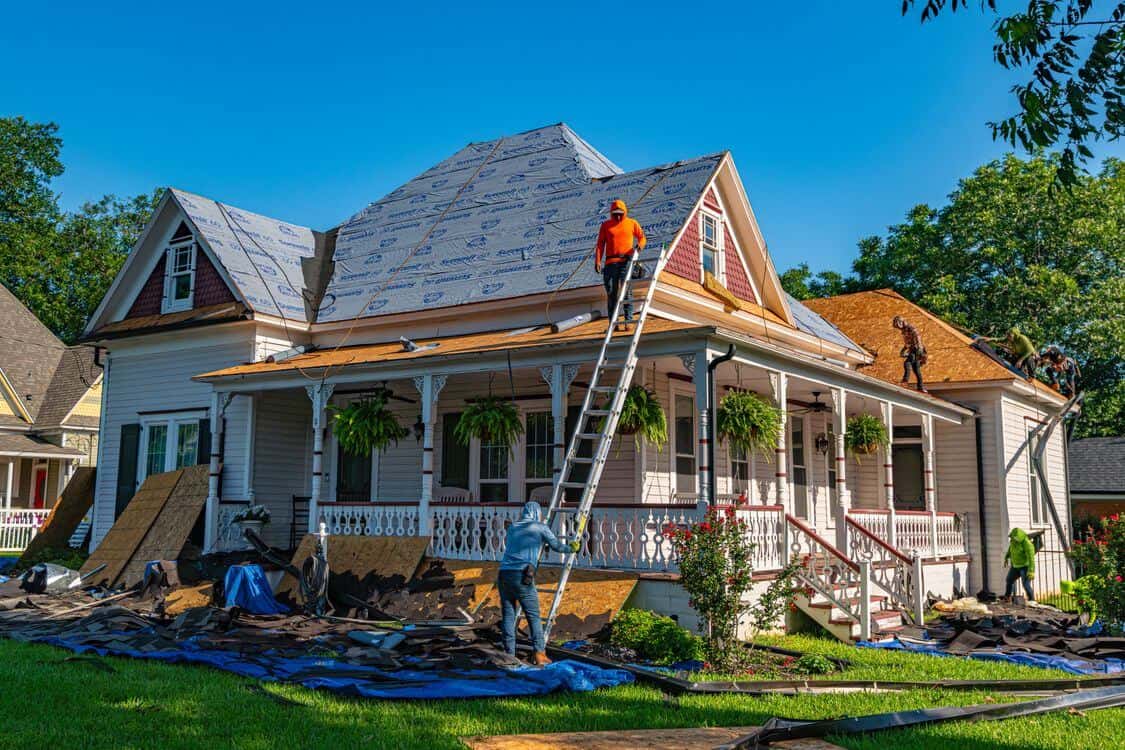
The broader appeal of authentic, process-oriented content makes sense for home improvement because the intermediate steps show work that disappears once the project is complete.
Roofing work is hard to fake convincingly. Torn-up underlayment, mismatched shingle stacks, ladder marks on siding: none of it looks like stock photography, which may be exactly why it lands better with skeptical audiences.
A perfectly finished roof shot reads as generic. It could belong to any house, in any city, at any time.
For roofing, the ‘messy middle’ can be informative because it shows decking condition, underlayment, flashing work, and sequencing that a finished exterior photo cannot.
Why Local Project Documentation Has Practical Value
National renovation accounts with big production budgets still dominate follower counts, but they can’t offer what hyperlocal audiences want: weather that looks familiar, and roof damage that looks like their own.
In Austin, storm-related reroofing gives homeowners a practical reason to care about what the process looks like. Before-and-after documentation can make an otherwise hidden construction sequence easier to understand. Before-and-after documentation can also help homeowners understand what a roof installation in Austin actually involved beneath the finished shingles.
They want to see what storm damage actually looks like on a roof similar to theirs, not a stylized transformation reel shot somewhere else. That demand is pulling roofing content out of the background and into the feed.
The format keeps spreading partly because it satisfies the platform’s appetite for process-driven storytelling, and partly because it gives viewers something they can actually use.
Contractors who document projects can build a clearer portfolio, especially when the photos show more than a final curbside view.
That accidental archive turns out to be useful. It documents materials, sequencing, and weather conditions in a way a single after photo never could.
Some of what’s accelerating this isn’t audience taste alone. Platform recommendation systems favor content that holds attention across a longer arc, and a before-during-after sequence does that better than a static reveal.
A single glossy photo asks for one glance and a like. A multi-part transformation sequence asks a viewer to keep watching to see how it resolves, and that is exactly the kind of engagement signal these platforms are built to reward.
Platform algorithms may reward multi-step stories, but the homeowner-facing benefit is simpler: more complete project documentation gives a better picture of how the work was performed.
Home renovation accounts adapted fast once that pattern became clear, and roofing content rode along rather than driving the shift on its own.
The practical effect is a change in what homeowners expect to see before hiring anyone. A single finished photo used to be enough to gauge quality. Now it reads as incomplete evidence.
Viewers scrolling renovation content want proof of process now, not only proof of outcome. They want to see the underlayment, the flashing details, and the cleanup, not just the final curb appeal shot.
That expectation is filtering into how homeowners vet local contractors generally, roofing included. A portfolio that only shows finished results now stands out for what it’s missing.
Whether that expectation holds as a lasting standard or fades with the next content trend is still an open question. For now, the messy middle is where the attention is.
Roofing does not need to become a social-media phenomenon for before-and-after documentation to be useful. The format simply fits a project with a clear visual transformation.


